Selecting the right tooling delivers immediate improvements in finish quality, production speed and tool life..


Same Day Dispatch

Australian Owned

Free Delivery for Orders Over $500

CNC Tooling Specialists
Medium-density fibreboard (MDF) has become one of the most widely used engineered timber products across Australian workshops. Cabinetry and furniture manufacturing to shopfitting, joinery and architectural interiors, MDF offers exceptional consistency, affordability and versatility. Its smooth surface makes it ideal for painting, laminating and routing intricate profiles.
Despite these advantages, MDF presents several machining challenges that impact productivity, finish quality and tooling costs if the wrong cutting tools are used. At BMC Tooling, we regularly work with manufacturers looking to improve machining performance when working with MDF. In many cases, selecting the right tooling delivers immediate improvements in finish quality, production speed and tool life.
Selecting the right tooling delivers immediate improvements in finish quality, production speed and tool life..
Unlike natural timber, MDF is manufactured from fine wood fibres bonded together with synthetic resins under high pressure. The result is a dense, uniform material with no grain direction. While this consistency is a major advantage, the fibre density and resin content make MDF surprisingly abrasive. Every cut gradually wears away the cutting edge, particularly when machining high production volumes.
MDF also produces extremely fine dust during machining. Without effective extraction and the correct cutter geometry, dust can accumulate around the cutting edge, leading to excess heat and reduced cutting performance. Another common issue is edge quality. Poor tooling often causes fuzzy edges, breakout or chipping that require additional sanding before painting or applying edge banding. This adds labour and slows production.
The single biggest factor influencing MDF machining performance is tooling quality. Premium carbide cutting edges maintain their sharpness longer than lower-grade alternatives. A sharper edge cuts cleanly through the fibres rather than tearing them, producing smoother finishes while placing less load on the machine spindle.
High-quality tooling also creates less heat during machining. Excessive heat accelerates wear and can leave burn marks or resin build-up on the cutting edges. Although premium tooling typically has a higher initial purchase price, it delivers a substantially lower cost per component due to longer service life and improved machining efficiency.
Although premium tooling typically has a higher initial purchase price, it delivers a substantially lower cost per component.
Compression spiral cutters are widely regarded as one of the best solutions for machining MDF panels. These tools combine an up-cut flute at the tip with a down-cut flute towards the shank. The opposing cutting action compresses the material from both directions, leaving exceptionally clean top and bottom edges.
This makes compression cutters particularly valuable when machining cabinet components, routed panels and decorative parts where both faces remain visible. The improved edge quality also reduces the need for secondary finishing operations, allowing components to move directly into painting or assembly.
For manufacturers machining MDF every day, polycrystalline diamond (PCD) tooling offers long-term value. Diamond tooling can deliver dramatically longer tool life compared with conventional carbide, particularly when machining highly abrasive materials like MDF. While the initial investment is higher, many high-volume manufacturers find that reduced tool-change downtime and consistent machining quality quickly offset the purchase cost. PCD tooling is particularly suited to CNC nesting machines and automated production lines where consistent performance is essential.
Not every router bit is suitable for MDF. The most effective tooling is engineered to evacuate dust efficiently while maintaining a consistent cutting action throughout the machining process. Depending on the application, workshops may choose:
Dust is an important consideration, and MDF produces exceptionally fine dust that can accumulate around the cutting edge. Poor extraction increases cutting temperatures, accelerates tool wear and reduces finish quality. Effective extraction keeps cutters cooler, maintains cleaner cutting edges and improves overall machining consistency.
Every workshop machine MDF differently. Feed rates, spindle speeds, machine type, production volume and finished product requirements all influence the best tooling selection. At BMC Tooling, we work closely with cabinetmakers, furniture manufacturers, shopfitters and joinery businesses to recommend tooling that matches their production requirements. Investing in quality tooling is one of the simplest ways to achieve cleaner finishes, longer tool life and more efficient production. When tooling is matched correctly to both the material and the application, workshops spend less time correcting problems and more time producing quality finished products.
Our team are ready to discuss the advantages of an optimal tooling setup, including compression cutters and how it will improve your profitability.
Visit our website for tooling solutions or contact our team for long-term expert guidance that gives your business the edge.

MDF is an abrasive material that requires specialised tooling to achieve clean finishes, maximise tool life and maintain efficient production.
Quality tooling delivers measurable savings through longer service life, improved machining quality and reduced secondary finishing.
Compression cutters and PCD tooling provide significant advantages for many MDF machining applications, particularly in high-volume production environments.
Working with tooling specialists like BMC Tooling helps manufacturers select the right tooling solutions for their machines, materials and production goals, improving both productivity and profitability.
Match the cutter to the application. Use compression cutters for through-cutting, down-cut spirals for clean top surfaces, and up-cut spirals where efficient chip evacuation is the priority.
Don’t compromise on tooling quality. Premium carbide and PCD tooling maintain a sharper cutting edge for longer, improving finish quality while reducing downtime and tooling costs.
Maintain effective dust extraction. MDF produces extremely fine dust, which increases heat and tool wear. A well-maintained extraction system helps improve machining performance and extends tool life.
Optimise your machining settings. Review feed rates, spindle speeds, and cutter geometry regularly to ensure your tooling is matched to your machine, production volume, and the required finish quality.
MDF is highly abrasive because it contains fine wood fibres bonded with synthetic resins. It also generates very fine dust, which can increase heat, accelerate tool wear and reduce finish quality if the correct tooling and dust extraction are not used.
Sharp, premium-quality tooling produces cleaner cuts, reduces heat build-up and lasts longer than lower-grade alternatives. This improves finish quality, reduces downtime and lowers the overall cost per finished component.
Compression cutters combine up-cut and down-cut flutes to produce clean top and bottom edges in a single pass. They are ideal for cabinetry, joinery, and decorative panels where both sides of the material require a high-quality finish.
PCD tooling is well-suited to high-volume MDF production because it offers significantly longer tool life than conventional carbide. Although the upfront investment is higher, many manufacturers benefit from reduced tool changes and more consistent machining performance.
The ideal router bit depends on the application. Compression cutters suit through-cutting; down-cut spirals provide excellent top-surface finishes; up-cut spirals improve chip evacuation; and specialised profiling tools produce clean painted edges.
Effective dust extraction removes fine MDF dust from the cutting zone, helping to keep tooling cooler and cleaner. This improves machining consistency, extends tool life and helps achieve a better-quality finish.
BMC Tooling works closely with cabinetmakers, furniture manufacturers, shopfitters and joinery businesses to recommend tooling that suits their machines, production volumes and finished product requirements. This tailored approach helps improve productivity, finish quality and tooling life.
BMC Tooling offers expert advice on complete tooling setups, including cutter selection and machining optimisation for MDF applications. By helping customers match the right tooling to their production processes, BMC Tooling reduces rework, minimises downtime and improves overall profitability.
BMC Tooling have the expertise and product selection to ensure your tooling equipment equips your aluminium manufacturing business. Our team are ready to discuss the advantages of an optimal tooling setup and how it will improve your profitability.
Visit our website for tooling solutions or contact our team for long-term expert guidance that gives your business the edge.
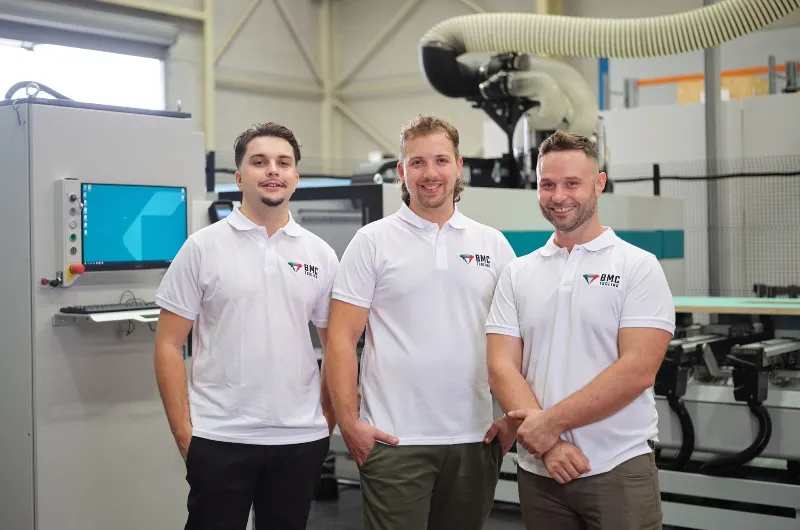
BMC Tooling has the tooling solution for almost any material. Whether you work with solid timber, MDF, laminates, composites, plastics, aluminium, or other non-ferrous materials, we supply industrial-grade tooling for clean finishes, efficient chip removal and extended tool life. We can come to you, or you can buy any of our tooling solutions online.
Our application-first approach ensures your cutter profile, substrate and machine setup are aligned for consistent results, reduced downtime and reliable performance across every run.


